
THE DIGITAL WORLD
Truth & Safety
Protect Yourself from Online and Telephone Scams: 12 Warning Signs
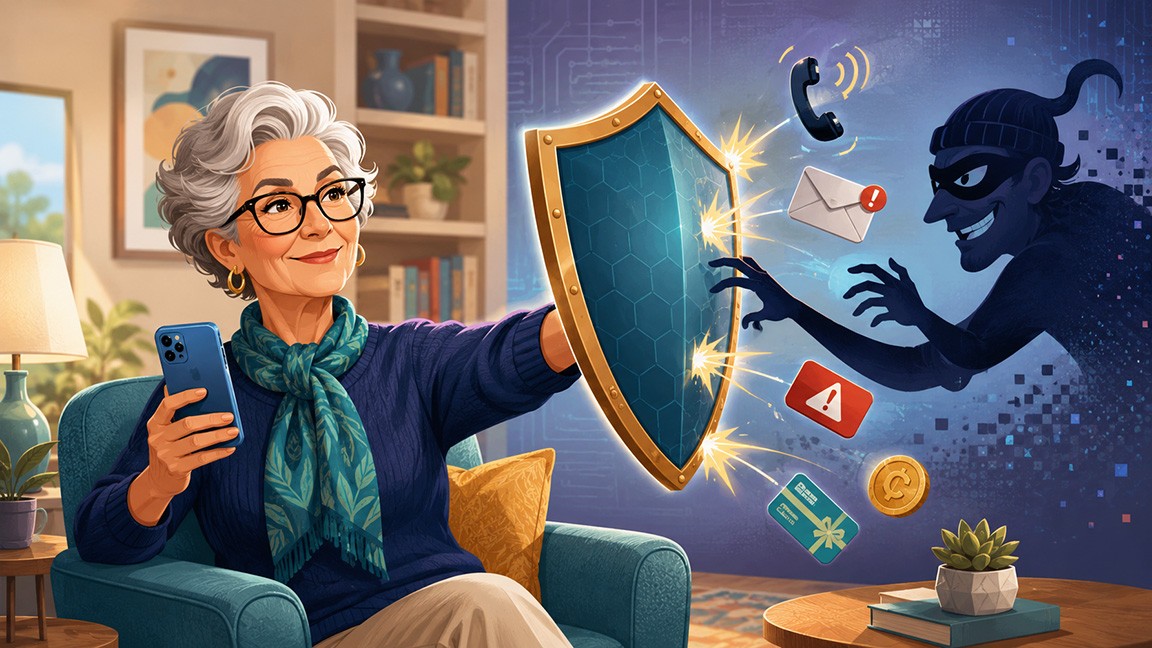
The voice on the phone sounds official. The caller ID shows the name of your bank. The person knows your name—and perhaps even part of your address or account number.
Then comes the bad news: Your account has been compromised. Your Social Security number has been suspended. A family member is in trouble. You owe money. You must act immediately.
It feels real because it is designed to feel real.
Today's scammers are not simply sending badly spelled emails from faraway "princes." They use professional-looking websites, convincing text messages, stolen personal information, fake caller ID numbers, artificial intelligence, and carefully rehearsed stories. Some will patiently stay on the telephone for hours while guiding a victim through a bank transfer, gift-card purchase, cash withdrawal, or cryptocurrency deposit.
The good news is that nearly every scam contains warning signs. You do not need to understand every new piece of technology to protect yourself. You only need to remember three words:
Pause. Verify. Protect.That small pause—the moment when you refuse to be rushed—can break a scammer's entire strategy.
Scam Victims Are Not FoolishBefore discussing the warning signs, let's clear up a damaging misconception: intelligent, responsible people fall for scams every day.
Scammers are professional manipulators. They create fear, excitement, sympathy, loneliness, or urgency because strong emotions can push anyone into acting before thinking. They may contact hundreds or thousands of people until they find someone who is tired, distracted, worried about a loved one, or simply caught at the wrong moment.
Older adults are often targeted because scammers believe they may have retirement savings, good credit, or a strong desire to help family members. According to the FBI, people age 60 and older filed more than 201,000 complaints and reported losses exceeding $7.7 billion in 2025. The average reported loss was more than $38,000. Those numbers reflect reported cases only; many victims never come forward because they feel embarrassed.
Embarrassment protects the criminal—not the victim. Talking about scams makes families and communities safer.
The 12 Biggest Warning Signs of a ScamA call, email, text, or social-media message deserves extra caution if it includes one or more of these warning signs:
- You are told to act immediately. Scammers create a false deadline so you will not stop to investigate.
- You are threatened. The caller mentions arrest, a lawsuit, deportation, disconnected utilities, a suspended account, or loss of benefits.
- You are told to keep the situation secret. A legitimate bank, police department, or family member will not demand secrecy from the people you trust.
- Payment must be made in an unusual way. Gift cards, cryptocurrency, Bitcoin ATMs, wire transfers, cash in a box, and gold are favorite scammer payment methods because recovery can be difficult.
- Someone wants remote access to your computer or phone. A stranger who asks you to install screen-sharing or remote-control software may be trying to enter your accounts.
- The offer is too good to be true. Guaranteed investment returns, surprise prizes, miracle products, and easy money deserve skepticism.
- You must pay to receive money. Taxes, processing fees, shipping costs, or deposits required before receiving a prize, grant, inheritance, or loan are classic bait.
- You are asked for a verification code. A code sent to your phone may be the last thing a criminal needs to enter your account. Never read it to an unexpected caller.
- The message contains a link you did not expect. It might claim to be a delivery notice, unpaid toll, fraud warning, refund, or account alert.
- The caller tells you not to contact your bank. This is a giant red flag. Scammers know that a banker, friend, or relative may expose the story.
- The person becomes angry when questioned. Legitimate organizations allow you to verify information. Scammers often respond with pressure, intimidation, or guilt.
- Something simply feels wrong. You do not need proof before hanging up, deleting a message, or asking someone you trust for help.
The caller claims suspicious activity has been found on your account. To "protect" your money, you must transfer it to a safe account, withdraw cash, or provide a security code.
There is no special safe account. You are moving money directly to the criminal.
What to do: Hang up. Call the number printed on the back of your bank card or use the bank's official app. Never call a number provided by the person who contacted you.
The government impersonatorThe caller may pretend to represent the IRS, Social Security Administration, Medicare, law enforcement, a court, or the Federal Trade Commission. The story often includes unpaid taxes, a suspended Social Security number, missed jury duty, or a warrant.
Government agencies do not demand immediate payment by gift card or cryptocurrency. They do not call to threaten arrest unless you pay while remaining on the line.
What to do: Hang up and find the agency's official contact information yourself. Do not trust a phone number or website sent in the message.
The grandchild or family-emergency scam"Grandma, I'm in trouble. Please don't tell Mom." The caller claims to have been arrested, injured, or stranded. A second person may pose as a lawyer, doctor, or police officer. Artificial intelligence can now imitate a person's voice from a short audio sample, making the story more believable.
What to do: Call the relative directly using a number you already have. Contact another family member. Ask a question only the real person would know. Consider creating a private family safe word for genuine emergencies.
The tech-support scamA pop-up or caller claims your computer has a virus, your account was hacked, or you are owed a refund. The scammer asks you to install software, share your screen, or log into online banking while the person watches.
What to do: Do not click the pop-up or call its number. Close the browser. If necessary, turn off the device and contact a trusted technician using contact information you find independently. Microsoft, Apple, and other technology companies do not make unsolicited calls to announce a problem with your computer.
The utility-company scamSomeone threatens to shut off electricity, gas, or water unless payment is made immediately.
What to do: Hang up and call the utility using the number on your bill or its official website. Do not pay through a link or number supplied by the caller.
Phishing messages try to make you click a malicious link, open an attachment, reveal a password, or provide financial information. When the bait arrives by text message, it is often called smishing.
Popular stories include:
- "Your package could not be delivered."
- "You owe an unpaid toll."
- "We detected suspicious activity."
- "Your account will be closed today."
- "Click here to claim your refund."
- "Is this you in this photo?"
What to do: Do not use the link. Open the company's official app or type its known website address into your browser. Be cautious even when a message appears in the same text thread as legitimate notices.
Romance and friendship scamsThe scammer builds an emotional relationship through a dating site, social network, game, or private message. Weeks or months later, an emergency, investment opportunity, travel problem, or medical crisis suddenly requires money. The person may always have a reason that an in-person meeting or live video call is impossible.
What to do: Never send money, cryptocurrency, gift cards, or banking information to an online romantic interest you have not met. Talk with someone you trust. A reverse-image search may reveal that the profile photograph was stolen, but remember that AI-generated photos and video can also be used.
Investment and cryptocurrency scamsThese schemes may begin with a social-media advertisement, online friendship, wrong-number text, or impressive-looking trading platform. The account appears to grow—sometimes dramatically—but withdrawals are blocked unless you pay more taxes or fees.
What to do: Treat guaranteed returns and low-risk, high-profit promises as danger signs. Independently verify the professional and company. Never invest because an online acquaintance, celebrity video, or surprise message tells you to do so. Cryptocurrency payments are generally difficult or impossible to reverse.
Online shopping and marketplace scamsCriminals post nonexistent products, pets, vehicles, rentals, or event tickets. They may send a fake payment notice, overpay with a fraudulent check, or ask a seller to refund money that never actually arrived.
What to do: Stay on the platform's approved payment system, inspect your real account instead of trusting an emailed receipt, and never pay extra to "upgrade" an account so you can receive money. Be cautious when a buyer or seller wants to move the conversation off the platform.
Recovery scams: the second attackAfter someone loses money, another scammer may claim to be an investigator, attorney, government agent, or recovery company that can get it back—for an upfront fee. Sometimes it is the same criminal returning under a new identity.
What to do: Never pay upfront for a promised recovery. Report the original crime through official channels.
Caller ID Is Not ProofMany people assume a familiar name or local number on caller ID confirms who is calling. It does not.
Through caller ID spoofing, criminals can deliberately falsify the name and number shown on your screen. A call may appear to come from your bank, a government office, the police department, or even your own telephone number.
Do not press buttons to be connected to a supposed fraud representative. Hang up and make a new call to a number you know is correct.
A Simple Scam-Stopping RoutineWhen something unexpected arrives, use this five-step routine:
1. StopDo not click, pay, transfer, download, or share information. Take a breath. A legitimate organization will allow you time to verify the situation.
2. End the contactHang up the phone. Close the message. Do not worry about seeming rude. Your financial safety matters more than a stranger's feelings.
3. Verify independentlyUse a number on a bank card, statement, official government website, or app you already trust. Do not use contact information supplied by the person making the claim.
4. Tell someoneCall a family member, friend, banker, or trusted adviser. Scammers try to isolate victims because a second opinion can collapse the story in seconds.
5. Report and blockBlock the sender or caller, report the account to the platform, and notify the appropriate authorities. Reporting helps investigators identify patterns and warn others.
Everyday Habits That Make You a Harder TargetYou do not need to become a cybersecurity expert. A few basic habits provide powerful protection:
- Use long, unique passwords for important accounts. A password manager can create and remember them for you.
- Turn on multifactor authentication. An authenticator app or security key is generally stronger than text-message codes when available.
- Keep phones, tablets, computers, browsers, and security software updated.
- Let unknown calls go to voicemail. A genuine caller can leave a message.
- Activate spam-call and spam-text protection through your telephone provider or device settings.
- Lock your credit if you are not actively applying for a new loan or account.
- Review bank, credit-card, investment, Medicare, and insurance statements regularly.
- Limit personal details shared publicly. Birthdays, family names, travel plans, and pet names can help criminals create believable stories or guess security answers.
- Never allow an unexpected caller to remotely control your device.
- Create a family rule: no urgent financial request is acted upon until another trusted person has been consulted.
Act quickly, but do not panic. Depending on what happened:
- Contact the bank, card issuer, wire service, payment app, gift-card company, or cryptocurrency platform immediately. Say clearly that the transaction was connected to a scam and ask whether it can be stopped or reversed.
- Change exposed passwords immediately. If a password was reused, change it everywhere it was used. Turn on multifactor authentication.
- Call the bank directly if account or card information was shared. Ask about freezing accounts, replacing cards, and watching for unauthorized activity.
- Disconnect a compromised device from the internet. Remove remote-access software and have the device checked by a trusted professional. Change sensitive passwords from a different, secure device.
- If your Social Security number or identity information was exposed, visit IdentityTheft.gov for a personalized recovery plan. Consider freezing your credit with Equifax, Experian, and TransUnion.
- Save the evidence. Keep screenshots, messages, receipts, email addresses, phone numbers, account details, transaction records, and cryptocurrency wallet addresses.
- Report the scam. File a report with the Federal Trade Commission and, for internet-enabled crime, the FBI's Internet Crime Complaint Center. Contact local police if cash was taken, threats were made, or immediate local assistance is needed.
- Watch for recovery scammers. Criminals may contact you again and promise to recover the money for a fee.
There is never a guarantee that money can be recovered, but speed matters. Do not let embarrassment delay the call.
A Ten-Second Test Before You ActAsk yourself:
- Did this contact arrive unexpectedly?
- Is someone trying to frighten, excite, or rush me?
- Am I being asked to send money or reveal private information?
- Does the payment method seem unusual?
- Have I verified the story through a separate, trusted source?
If any answer concerns you, stop. You can always call back after checking. You cannot always reverse a payment after it is sent.
Stand Tall, Stay Connected, and Speak UpThe best defense against scams is not suspicion of everyone. It is a willingness to slow down, verify independently, and talk openly.
Share scam attempts with family and friends—even when you spotted the trick immediately. Your story may help someone else recognize the same script tomorrow. If a loved one is targeted, respond with patience instead of blame. Shame causes silence, and silence gives scammers room to work.
Remember: legitimate organizations do not fear verification. A real bank, government agency, utility, or family member will understand when you say:
"I do not make decisions during an unexpected call. I will verify this myself and call back using a number I trust."
That is not rude. That is standing tall and strong.
Quick Reference: Stop a Scam in Three StepsPAUSE: Do not click, pay, transfer money, or share a code.
VERIFY: End the contact and reach the person or organization independently.
PROTECT: Tell someone, secure your accounts, save evidence, and report the attempt.
Trusted Resources- Federal Trade Commission: Scam Information and Alerts
- Report Fraud to the FTC
- FBI Internet Crime Complaint Center
- IdentityTheft.gov Recovery Plans
- FCC Guide to Caller ID Spoofing
This article provides general educational information and is not legal, financial, or cybersecurity advice. If you believe a crime is happening now or someone is in immediate danger, contact local law enforcement or call 911.
